
Pothole Repair in Knoxville, TN
Real saw-cut patches with base repair underneath — not the throw-and-go cold patch that pops back out by the first February freeze.
Get My Free Pothole Estimate (865) 745-7491Pothole Repair in Knoxville, TN
A1 Asphalt Knoxville repairs potholes on driveways, parking lots, and private roads across Knoxville and surrounding Greater Knoxville. Most potholes in East Tennessee form the same way: water gets into a crack, freezes during a January cold snap, expands and breaks up the asphalt and base underneath, and the next car that hits it kicks the pieces out. We fix the cause — the failed base — and patch with hot-mix and proper tack coat so the repair bonds and holds. Call (865) 745-7491 for a free estimate.
Why Most Pothole Patches Fail Within a Year
Drive around Knoxville the spring after a cold winter and you'll see the same story everywhere: potholes that were patched last year, gone again. The reason isn't the asphalt — it's the patch method. The standard quick repair is what crews call a throw-and-go: shovel cold-patch into the hole, tamp it down with a foot or a hand tool, drive off. It looks fine for a few weeks. Then the cold patch (which is an emulsion-based product designed for emergency winter repair, not permanent fixes) loosens, the base under the hole — which is what caused the failure in the first place — is still failed, and a few freeze-thaw cycles later the patch pops out and you're back to where you started. The right repair starts under the surface. The pothole is a symptom; the failed base is the cause. We excavate down past the failure depth, install fresh aggregate base and compact it, prime the vertical cuts with tack coat, and place hot-mix in lifts thin enough to compact through fully. That's a patch that holds for the life of the pavement.


Request a Pothole Repair Estimate
Limited Slots Available This Month!
Saw-Cut Geometry, Tack Coat, and Hot-Mix at Temperature
Three things make a pothole repair last: clean saw-cut geometry, proper tack coat, and hot-mix placed at the right temperature. We saw-cut the perimeter of every pothole repair into a square or rectangular shape with vertical edges. Round or feathered edges leave the perimeter to crack outward under traffic; square cuts give the patch defined, structural edges to bond against. Tack coat — an asphalt-emulsion sprayed onto the cut faces and the prepared base — is what chemically bonds new hot-mix to the existing pavement. Skip it and the patch sits in the hole, doesn't bond, and water gets in around the perimeter and undermines it within a winter. Hot-mix has to be placed and compacted while it's at temperature — 250-290°F at placement, dropping into the 175-220°F window during compaction. Below that and the binder stiffens before the rollers finish their passes, leaving voids that take in water. We monitor mix temperature on every load and place lifts thin enough that compaction reaches all the way down. The patch comes out flush with the surrounding pavement, bonded at the edges, with full density through the depth.
When Cold Patch Makes Sense (and When It Doesn't)
Cold patch — the emulsion-bound asphalt sold in bags at home centers — has a legitimate use case, and it isn't permanent pothole repair. The right use is emergency winter work, when hot-mix plants are closed and a pothole has opened up in a hazardous spot. Cold patch will plug the hole well enough to prevent further damage and keep the surface drivable until a permanent repair can be made when paving season opens. We use it that way too — winter call-outs where a customer's lot or driveway has a pothole that has to be addressed before the next storm. What cold patch isn't is a substitute for hot-mix repair. The cold-patch emulsion is much softer than hot-mix, doesn't compact tight, and breaks down under traffic and freeze-thaw. We honestly tell customers when cold patch is what their job needs in January, and we follow up to install proper hot-mix patches when temperatures rise. The patch that holds the rest of the year is hot-mix, saw-cut, base-stabilized, properly tacked.
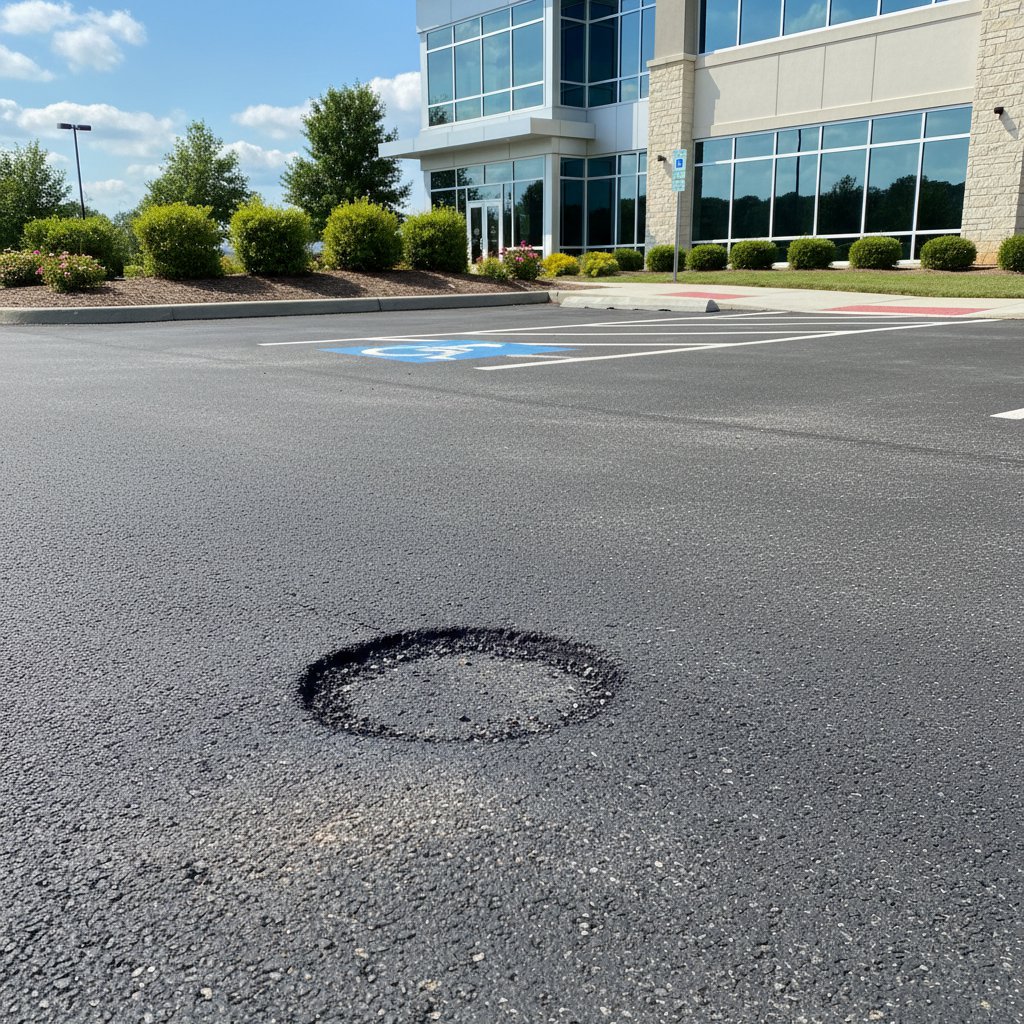
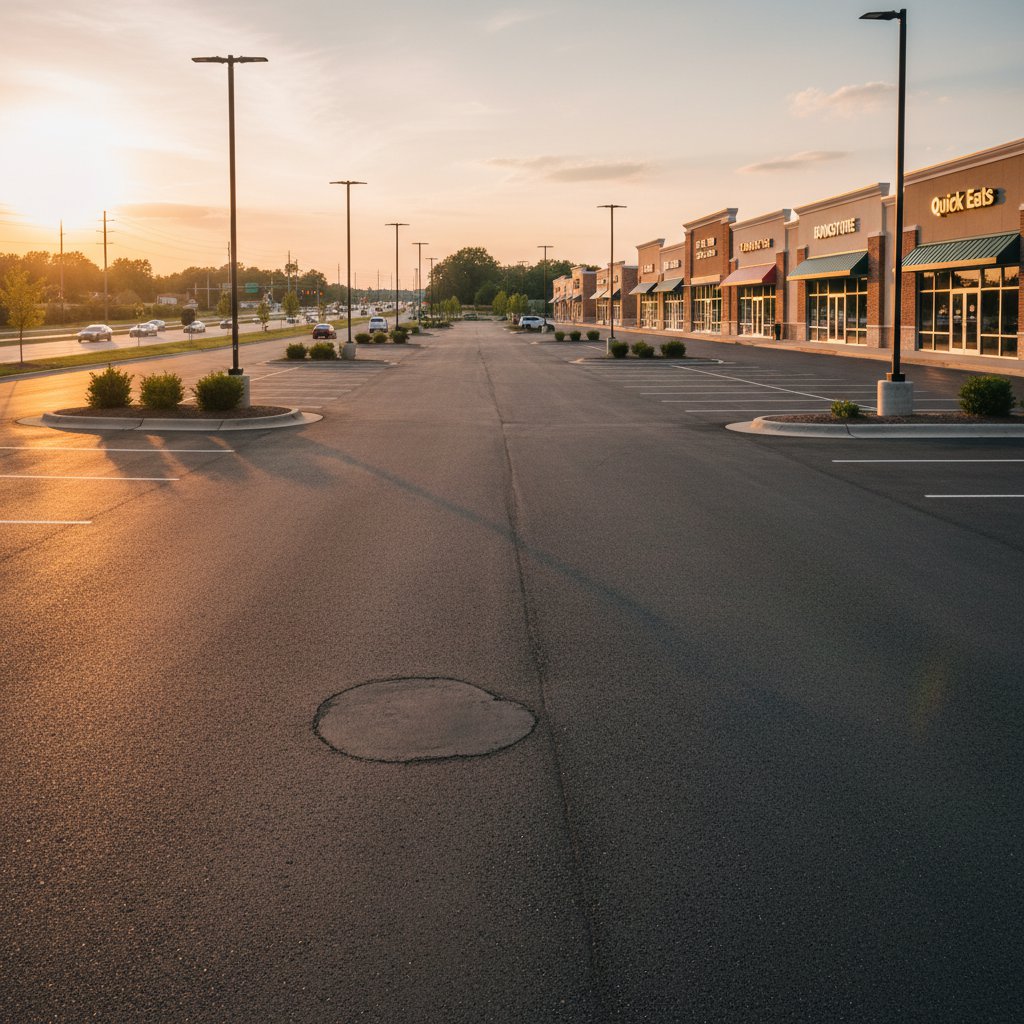
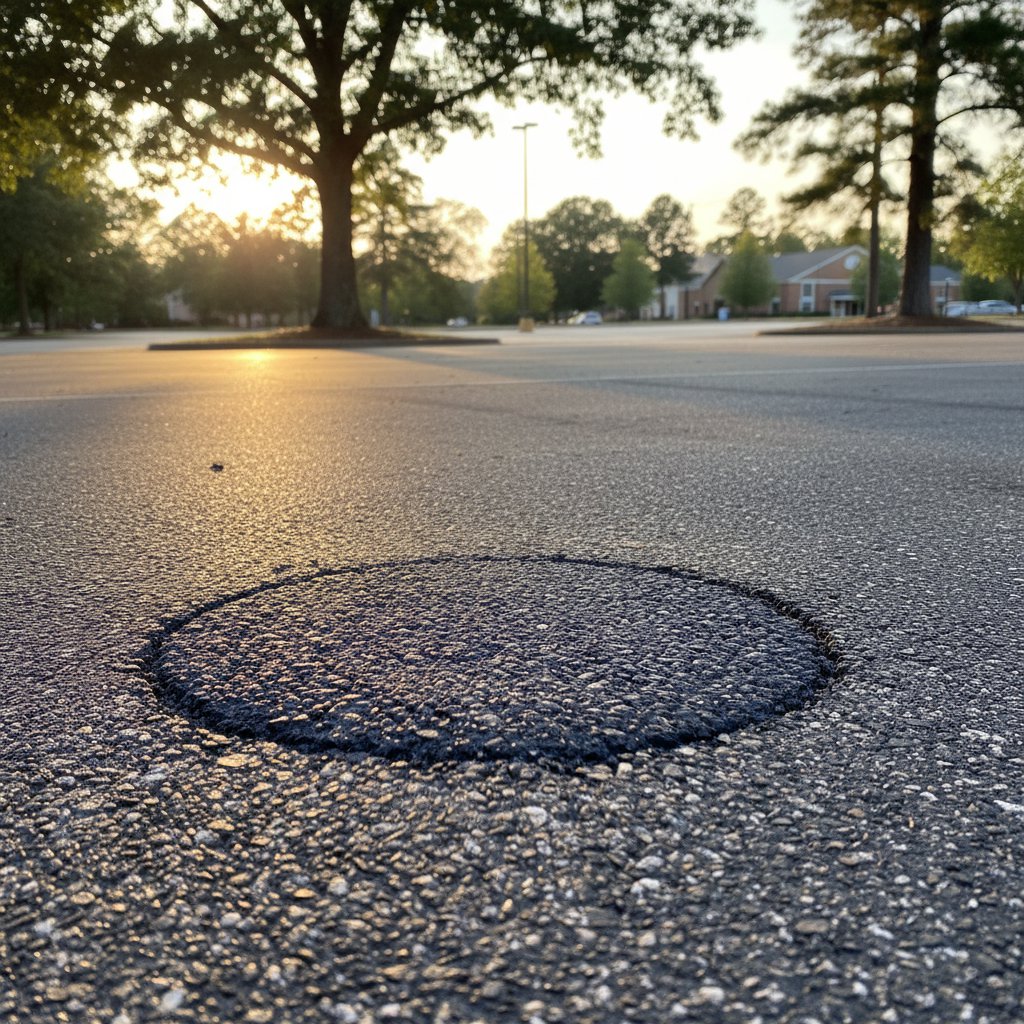
Recent Pothole Repair Jobs in Knoxville
Signs You Need Pothole Repair
Don't wait for an injury claim or vehicle damage complaint. These are the conditions to act on.
Potholes Forming in Drive Lanes
Active potholes are growing — water and traffic enlarge them every day. Saw-cut patches with base repair stop the growth and fix the underlying cause.
Patches That Already Popped Out
Re-failed patches mean someone fixed the symptom and not the cause. We excavate to find the base failure and rebuild it before placing new hot-mix.
Soft Spots in the Pavement
Spots that flex under vehicle weight will become potholes — usually after the next freeze. Catching them before they fail is dramatically cheaper than after.
Spring Damage From Last Winter
New potholes opening up in March or April are leftover freeze-thaw damage from the winter just past. Get them patched before another year of UV widens them.
How We Repair Potholes
Four steps, every pothole, every time.
Probe and Assess
Probe around the pothole to find the real failure depth, identify base movement or water intrusion, and write a scope that fixes the cause.
Saw-Cut and Excavate
Cut a square or rectangular perimeter into sound pavement, remove asphalt and failed base material to the proper depth, and prep cut faces.
Base Repair and Tack Coat
Install fresh aggregate base where the original failed, compact to spec density, and apply tack coat to vertical cuts and the prepared base.
Hot-Mix and Compaction
Place hot-mix at proper temperature in lifts, compact through the full depth, and finish the patch flush with the surrounding pavement.
What Our Clients Say
"Our driveway off Kingston Pike had hairline cracks running everywhere after last winter's freeze. They routed and hot-poured every one of them, then put a fresh sealcoat down before fall. Made it through this winter clean — no widening, no new potholes."

Ready to Fix Those Potholes?
Get a free written estimate from a contractor that fixes the cause, not just the hole. Hot-mix patches that bond, compact, and hold through East Tennessee freeze-thaw cycles.