Asphalt Repair in Knoxville, TN
Repairs that hold — base fixed, edges rebuilt, hot-mix patches saw-cut clean and properly tacked so the fix bonds to what's around it.
Get My Free Repair Estimate (865) 745-7491Asphalt Repair in Knoxville, TN
A1 Asphalt Knoxville repairs failing asphalt across Knoxville and the surrounding Greater Knoxville metro. Most of what we get called to fix isn't surface damage — it's surface damage caused by something failing underneath, usually water in the base or a freeze-thaw heave that nobody saw coming. We fix the cause before we patch the symptom. Saw-cut patches, base rebuilds, edge restoration, and skin patches done with hot-mix and proper tack coat. Call (865) 745-7491 for a free written estimate.
Why Most Asphalt Patches Fail Inside Two Winters
Drive around Knoxville and you'll see the same pattern: a pothole patched in May, gone again by March. Most failed patches aren't failed because of bad asphalt — they're failed because the base was never fixed. Asphalt is a surface course; it doesn't carry structural load on its own. When a pothole forms, the surface is just the visible end of a base failure: water got into the sub-grade, freeze-thaw broke it down, and the asphalt above lost its support. Throwing cold patch or even hot-mix into the hole without fixing what's underneath gives you a patch that sits on top of moving ground. Inside a winter or two, the same failure mechanism is back. The right repair starts under the surface: excavate to find the failure depth, replace failed base material with compacted aggregate, and only then place the asphalt. We saw-cut the perimeter square so the patch has clean vertical edges to bond against, prime the cuts with tack coat, and place hot-mix in lifts thin enough to compact through fully. That's the patch that holds.


Request a Repair Estimate
Limited Slots Available This Month!
Repair Types — Saw-Cut Patches, Skin Patches, Edge Rebuilds
Different failures need different fixes. Saw-cut full-depth patches are for localized base failures: alligator cracks across a section, settled patches, or potholes that have opened up. We saw-cut a square or rectangular perimeter around the failure, remove asphalt and any failed base material, install fresh aggregate base to spec, and place hot-mix in lifts with full compaction. Skin patches (overlay patches) are for surface-only failures: areas of raveling, light cracking, or cosmetic damage where the base is sound. We clean the area, apply tack coat, and place a thin asphalt lift over the existing surface. Edge rebuilds address the failure mode that takes out most Knoxville residential driveways: the unsupported edge crumbling off year after year. We rebuild the soil shoulder, replace any failed edge asphalt with hot-mix, and roll the new edge with a small drum to compact it tight. Each repair gets specified to what's actually failing — not a one-size approach.
Tack Coat, Hot-Mix Temperature, and the Patches That Bond
A repair only lasts when the new asphalt bonds to the surface around it. Two things make that happen, and skipping either is why most cheap repair work fails. First, tack coat — an asphalt-emulsion sprayed on the existing surface and on the vertical cuts before new hot-mix goes in. Tack coat is what makes the new asphalt stick chemically to the old. Skip it and the patch sits in the hole instead of bonding to it; the perimeter cracks open within a winter. Second, mix temperature. Hot-mix has to be placed and compacted while it's still hot enough to compact correctly, typically 250-290°F at placement. We monitor truck temperature on arrival and won't place a load that came in cold. Cold mix patches — the kind you buy in a bag at the home center — are useful for emergency winter repairs when no plants are running, but they're not a permanent fix. We use them where they make sense (a January pothole that has to be plugged before the next freeze) and replace them with hot-mix patches when paving season opens.
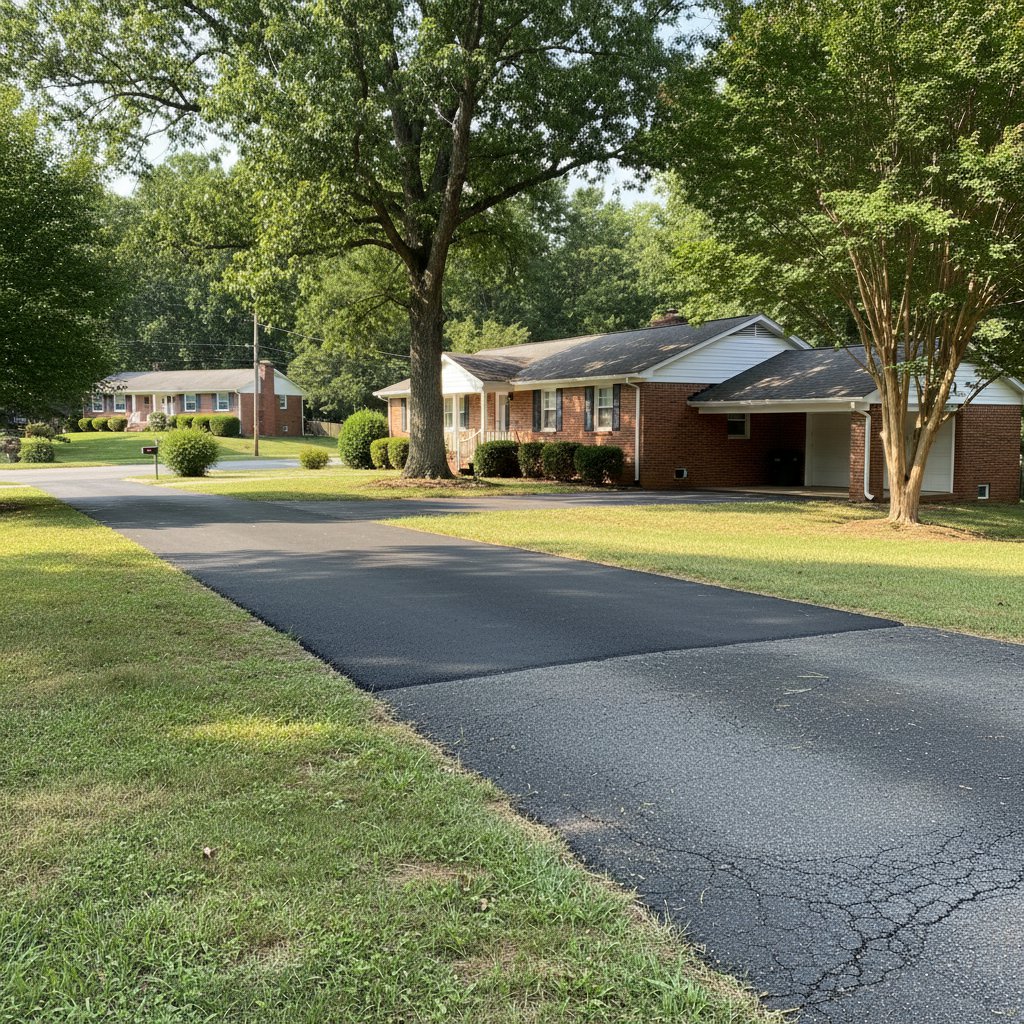
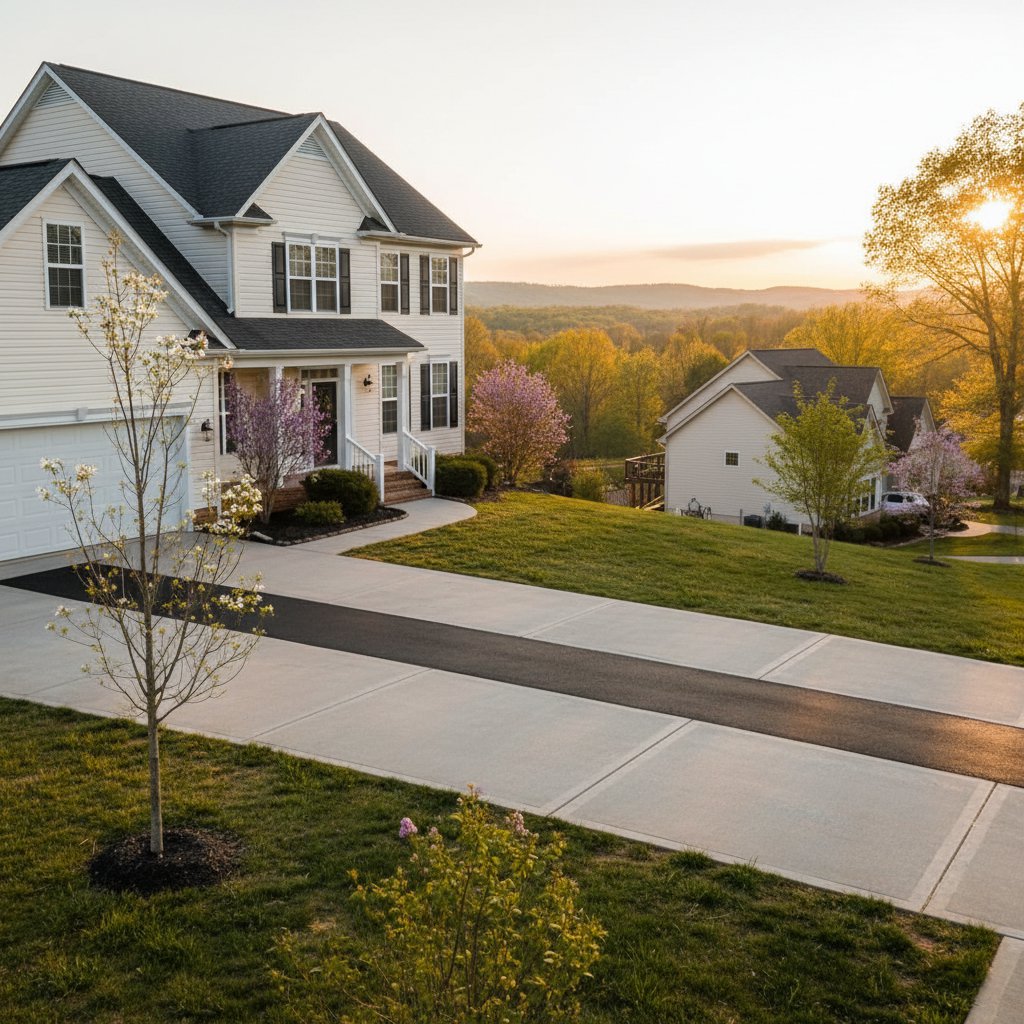
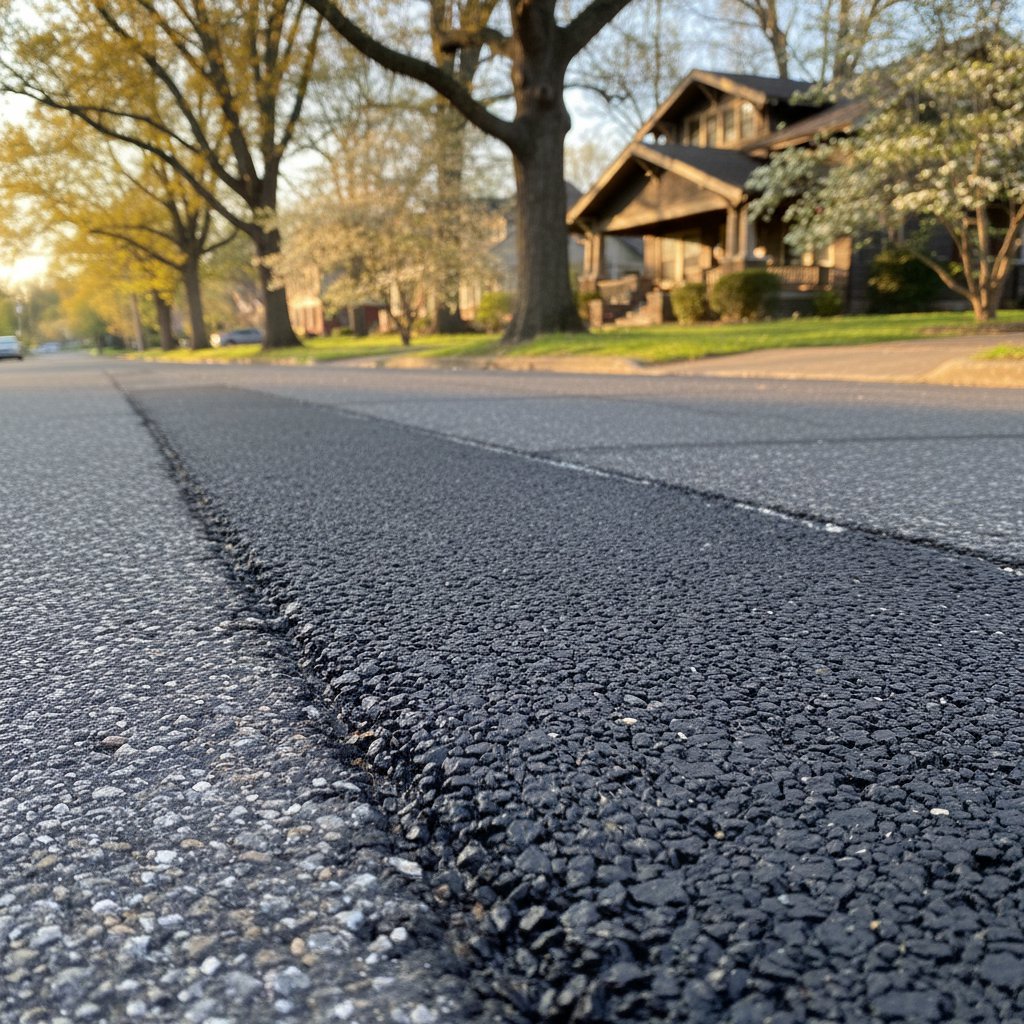
Recent Repair Jobs in Knoxville
Signs You Need a Repair
Asphalt failures usually announce themselves before they get catastrophic. These are the early signals.
Potholes Opening Up
Potholes are base failure showing through the surface. They get bigger fast under traffic — saw-cut patches with base repair stop the growth.
Alligator Cracking in Localized Spots
Interconnected cracking in a defined area means the base under that section has failed. A full-depth patch fixes it without rebuilding the whole pavement.
Edges Crumbling on a Driveway
Unsupported edges erode and break off. Edge rebuilds restore the supporting shoulder and confine the new edge so it doesn't fail again.
Settled or Sunken Sections
Sunken spots usually mean water has washed out the base or a freeze-thaw heave has cycled. Patch repairs lift the section back to grade and stabilize the base.
How We Repair
Four steps, scaled to the size of the failure.
Assess the Failure
Probe the area to find the real failure depth, identify what's causing it (water, freeze-thaw, base movement), and write a scope that fixes the cause.
Saw-Cut and Excavate
Cut a clean perimeter around the failure, remove failed asphalt and base material to the right depth, and prep the cut faces for tack coat.
Base Repair and Tack Coat
Install and compact fresh aggregate base where needed, apply tack coat to vertical cuts and the prepared surface, and verify before placing asphalt.
Hot-Mix Placement and Compaction
Place hot-mix at proper temperature in lifts thin enough to compact through, run full compaction, and finish the patch flush with the surrounding surface.
What Our Clients Say
"Our driveway off Kingston Pike had hairline cracks running everywhere after last winter's freeze. They routed and hot-poured every one of them, then put a fresh sealcoat down before fall. Made it through this winter clean — no widening, no new potholes."

Ready to Get It Fixed?
Get a free written estimate from a paving contractor that fixes the cause of the failure — not just the visible damage. Patches that actually last through East Tennessee winters.