
Asphalt Paving in Knoxville, TN
Hot-mix asphalt installation built on a properly graded, well-drained base — designed to outlast East Tennessee's freeze-thaw cycles and summer UV.
Get My Free Paving Estimate (865) 745-7491Asphalt Paving in Knoxville, TN
A1 Asphalt Knoxville installs hot-mix asphalt for driveways, parking lots, and private roads across Knoxville and the surrounding East Tennessee counties. The difference between asphalt that lasts 25 years and asphalt that fails in 8 isn't the surface — it's what's underneath. We grade and compact the sub-base for drainage, lay mix at proper temperature, and run the full compaction sequence the spec calls for. Call (865) 745-7491 for a free written estimate.
Why Base Prep Decides How Long Your Asphalt Lasts
Most asphalt failure in East Tennessee starts under the surface, not on it. Knoxville sits on clay-heavy ridge-and-valley terrain that holds water, and when water sits under pavement and the temperature drops below freezing — which happens every winter here — it expands, lifts the asphalt, and breaks the bond between the surface and the base. By spring you've got alligator cracking, soft spots, and potholes that nobody can explain because the surface still looked fine in November. The fix is the same one road engineers use on state highways: cut the sub-grade to the right depth, install a properly compacted aggregate base of crushed stone, and slope it so water runs off and away from the pavement instead of pooling under it. We grade with a plate compactor or a steel-wheel roller depending on the job size, we hit the density specs the mix design calls for, and we don't put hot-mix down on a base that hasn't been signed off as ready. Skip this step and the best asphalt mix in Tennessee won't save you.


Request a Paving Estimate
Limited Slots Available This Month!
Hot-Mix Asphalt, Laid at the Right Temperature
Hot-mix asphalt is mixed at the plant at 300-325°F and has to be laid and compacted while it's still in the right temperature window — typically 250-290°F at the screed, dropping into the 175-220°F range during compaction. If the mix cools below 175°F before the rollers finish their passes, the binder stiffens and you can't get full density, and a low-density mat leaves voids that let water in. That's why winter paving doesn't work in East TN — by the time the truck arrives from the plant, ambient cold has pulled the mix temp below spec. We work April through October, monitor mix temperature on every load, and break a job off if a load arrived cold rather than lay it and call it done. We also match the mix design to the application: a denser surface mix for parking lots that take constant traffic, a lighter surface mix for residential driveways, and proper lift thickness so the rollers can compact through the full mat without bridging.
Edges, Drainage, and the Details That Show Up in Year Five
Asphalt fails first at the edges. Unsupported edges crack and crumble as the load above them shifts, and water gets in fast once an edge starts to break down. We confine edges against curbs and garage thresholds where they exist, build proper soil shoulders where they don't, and roll the edge with a small drum after the main mat is compacted. Drainage gets designed in from the start — we look at where the runoff goes during a Knoxville thunderstorm, how the lot sheds onto the surrounding grade, whether there's standing water against the building, and whether the slope is enough to keep ice from sheeting in winter. On long driveways across the West Knoxville hills, we plan cross-pitch to keep water from racing down the centerline. None of this shows up in year one. It shows up in year five when your driveway still looks like a driveway and your neighbor's has alligator cracking running down the middle.
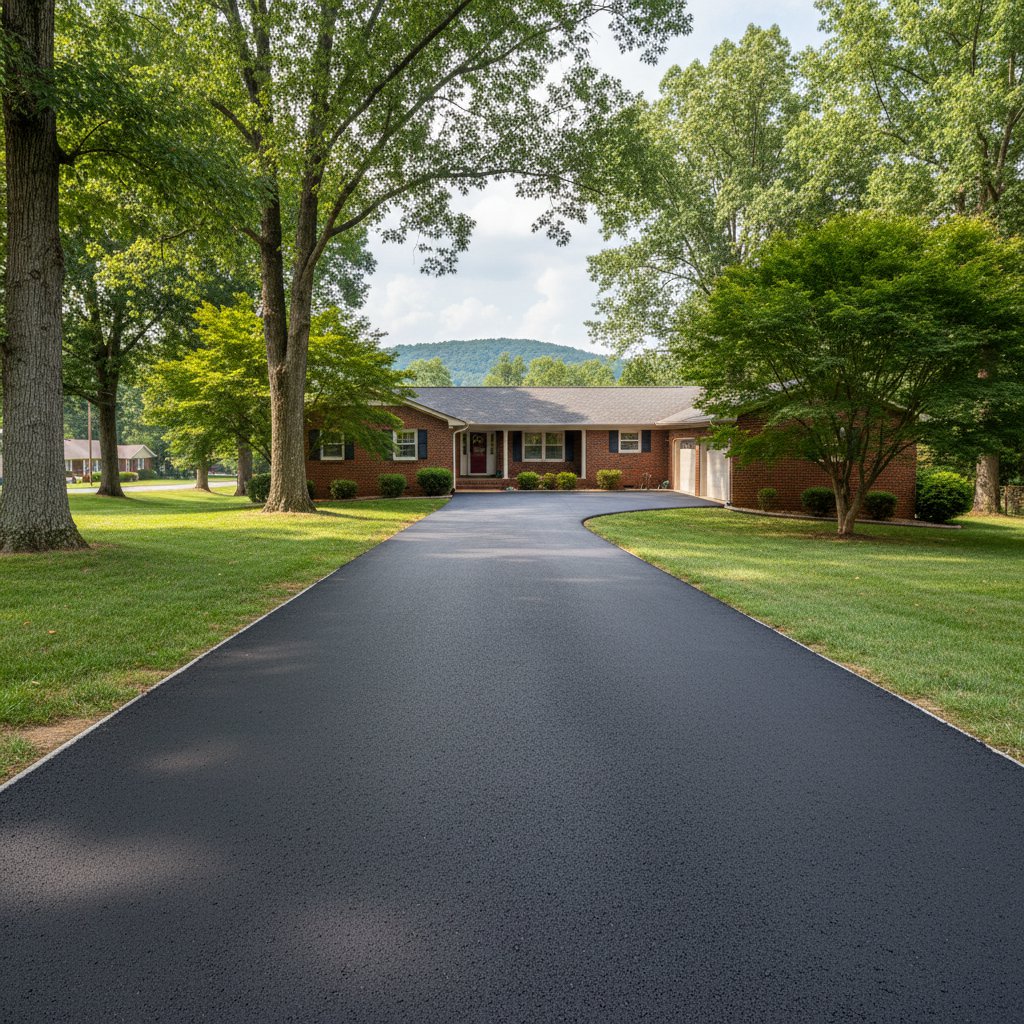
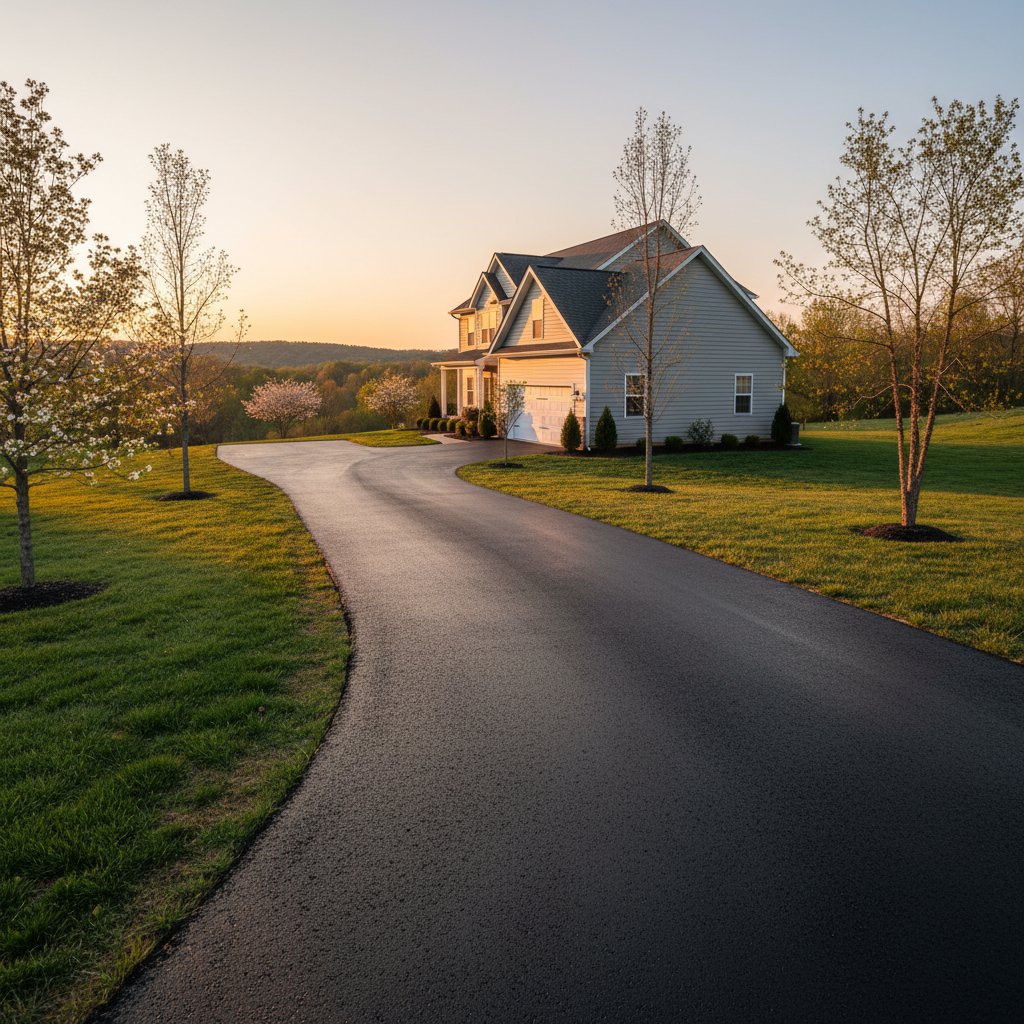
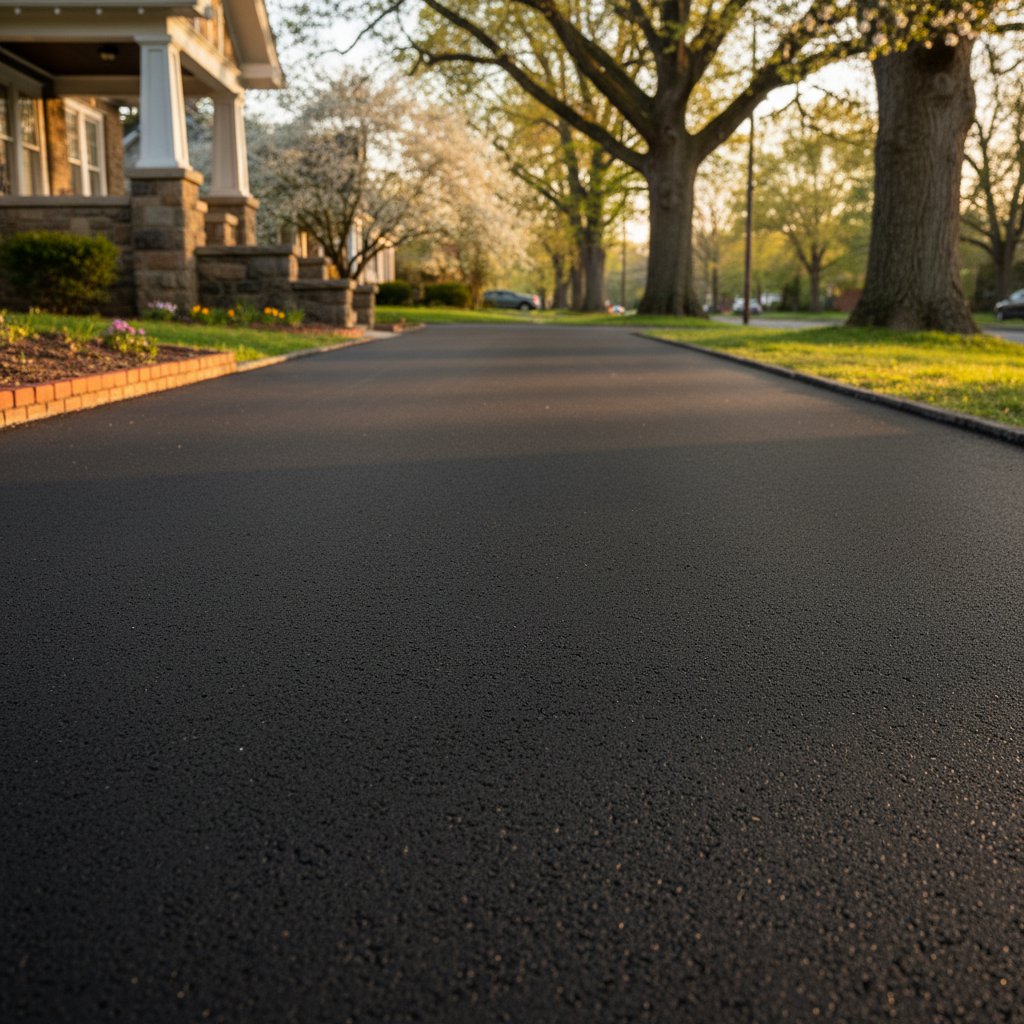
Recent Asphalt Paving Jobs in Knoxville
Signs You Need New Asphalt
Resurfacing won't save every driveway or lot. These are the conditions where a fresh full-depth install is the right call.
Alligator Cracking Through the Surface
Interconnected cracks that look like alligator skin mean the base has failed underneath. Overlay won't hold — the structure has to be rebuilt from the sub-grade up.
Pavement Older Than 25 Years
At that age the binder is fully oxidized, the mat has lost flexibility, and patching becomes a recurring expense. A full replacement resets the maintenance clock.
Standing Water After Rain
Pooling means slope and drainage were wrong from the start. A new install lets us regrade for runoff so water moves off the surface before freeze-thaw can damage it.
Multiple Failed Patches
When patches keep failing in the same area, the base is moving. Full removal lets us fix what's underneath instead of stacking surface repairs on a bad foundation.
How We Pave
Four steps, in order, every job.
Site Assessment and Written Quote
We measure, look at base condition, runoff, slope, and any standing-water history, then deliver a written scope and itemized price before any work starts.
Sub-Grade Prep and Base Build
Excavate to depth, install and compact a crushed-aggregate base, grade for drainage, and verify density before any mix is ordered.
Hot-Mix Placement at Spec
Place hot-mix at proper temperature with a paver, hand-work tight areas and edges, then run the full compaction sequence with breakdown, intermediate, and finish rolls.
Cure, Maintenance Plan, Walk-Through
Post the cure schedule, walk the finished surface with you, and hand off the written maintenance plan — when to first sealcoat, when to crack-fill, what to watch for.
What Our Clients Say
"Our driveway off Kingston Pike had hairline cracks running everywhere after last winter's freeze. They routed and hot-poured every one of them, then put a fresh sealcoat down before fall. Made it through this winter clean — no widening, no new potholes."

Ready for New Asphalt?
Get a free written estimate from a paving contractor that builds for East Tennessee's climate — engineered base, proper compaction, and a maintenance plan that actually extends the lifespan.